
Home / Knee injuries
Knee injuries
Meniscal tears, ligament injuries, cartilage damage and dislocations, many of them sustained during sport.
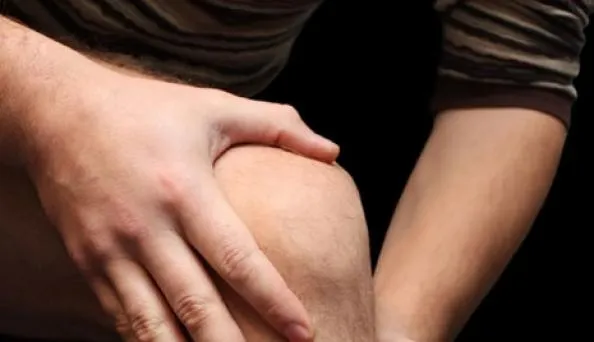
Torn meniscus (cartilage)
The meniscus is a C shaped disc of soft tissue that sits between the bones of the knee. It is often referred to as the cartilage and acts predominantly as a shock absorber between the two bones. Each knee has…
Anterior cruciate ligament injuries (ACL)
The anterior cruciate ligament is a relatively large ligament, which sits in the middle of the knee joint between the femur or thighbone and the tibia or shinbone.
Medial collateral ligament injuries (MCL)
The medial collateral ligament is a strong ligament, which attaches to the inside or medial aspect of the knee. This is a commonly injured ligament. Adrian often sees medial collateral ligament injuries as a…
Posterior cruciate ligament ruptures (PCL)
The posterior cruciate ligament is a large ligament in the knee. It is not as commonly injured as other ligaments in the knee such as the anterior cruciate ligament or medial collateral ligament. Significant…
Lateral collateral ligament injuries (LCL)
The lateral collateral ligament is one of the stabilising ligaments on the outside or the lateral side of the knee. Injury of the ligament is often associated with pain on the outside of the knee and may be…
Articular cartilage damage
The articular cartilage forms a lining covering the bones within the knee joint.
Patellar dislocation
The patella, or kneecap sits on the front of the knee and is in fact a sesamoid bone or a bone within tendons at the front of the knee.
Extensor mechanism injuries
The patella or kneecap works in conjunction with the quadriceps tendon above the kneecap and the patellar or kneecap tendon below the kneecap to enable straightening and straight leg raising of the lower leg.